Table of Contents
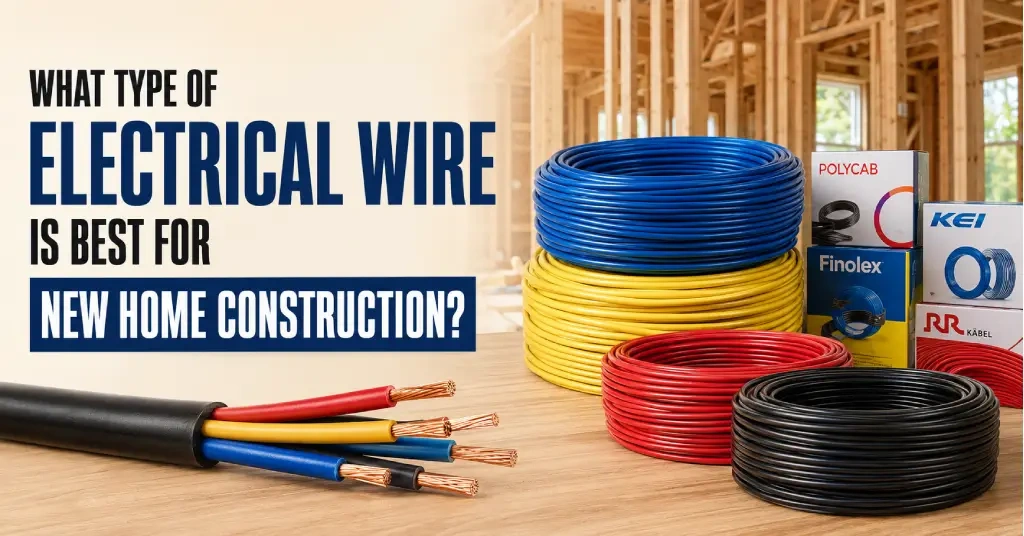
What Type of Electrical Wire Is Best for New Home Construction?
Building a New Home? Choosing the Right Electrical Wire Is One Decision You Shouldn’t Compromise On
When people begin constructing a new home, most attention goes toward architectural design, flooring, plumbing, paint, lighting, and interior finishes. However, one of the most critical components of the entire building often remains hidden behind walls—the electrical wiring.
Unlike tiles or paint, electrical wires cannot be replaced easily after construction is complete. Once concealed inside walls, ceilings, and conduits, they are expected to perform reliably for decades. Choosing the wrong type of wire can lead to premature insulation deterioration, voltage drops, overheating, maintenance issues, or expensive rewiring in the future.
That is why selecting the right electrical wire during the construction stage is one of the smartest long-term investments a homeowner can make.
Modern residential electrical systems power much more than lights and fans. Today’s homes rely on multiple high-load appliances, including air conditioners, induction cooktops, geysers, EV chargers, refrigerators, washing machines, microwave ovens, home automation systems, CCTV cameras, and internet infrastructure. As electrical demand increases, the quality of the wiring system becomes even more important.
A high-quality electrical wire should provide:
- Reliable electrical conductivity
- Long service life
- Excellent insulation performance
- Resistance to electrical faults
- Enhanced fire safety
- Consistent performance under varying load conditions
- Compliance with applicable Indian Standards
Among the leading names in India’s electrical industry, Finolex has earned the trust of homeowners, builders, architects, consultants, and electricians through decades of manufacturing high-quality house wires and cables. Finolex house wires are manufactured with high-conductivity copper conductors and are available in insulation variants such as FR, FRLS, and FRLSH, enabling users to choose products suited to different residential applications. Finolex specifies that these products comply with IS 694:2010 requirements for PVC-insulated house wires and include performance characteristics such as a minimum 100% IACS conductivity for the copper conductor, an Oxygen Index above 29%, and a Temperature Index of at least 250°C for its FR and FRLSH ranges.
However, selecting the best electrical wire is not simply about choosing a well-known brand. It involves understanding several technical factors, including conductor material, insulation type, wire size, fire performance, installation environment, and the electrical load the circuit is expected to carry.
This comprehensive guide explains everything homeowners, builders, and electrical contractors should know before selecting electrical wires for a new home. It also explores why Finolex wires are widely chosen for residential projects and how to select the right insulation type for different areas of the house.
Why Choosing the Right Electrical Wire Matters in New Home Construction
When building a new home, many homeowners compare the prices of tiles, sanitaryware, doors, windows, and paints. However, one of the most important investments remains hidden inside the walls—the electrical wiring.
Unlike decorative finishes that can be upgraded over time, electrical wires become a permanent part of the building’s infrastructure. Once concealed behind walls and ceilings, replacing them usually involves breaking plaster, damaging interiors, and incurring significant labour costs. This makes the initial wire selection one of the most important decisions during home construction.
A high-quality electrical wiring system contributes to the overall safety, efficiency, and reliability of the home’s electrical network. Whether you’re planning a compact apartment, an independent villa, or a luxury residence, selecting the right electrical wire helps ensure the installation can support present-day electrical requirements while accommodating future upgrades.
Today’s homes consume considerably more electricity than they did a decade ago. Multiple air conditioners, induction cooktops, water heaters, microwave ovens, washing machines, smart televisions, home automation systems, CCTV cameras, Wi-Fi networks, and even electric vehicle chargers have become increasingly common. As the connected load increases, the quality of the electrical wiring becomes even more important.
Choosing a trusted brand like Finolex gives homeowners access to a wide range of copper house wires engineered for different residential applications. Finolex manufactures house wires with high-conductivity copper conductors and insulation options such as FR, FRLS, and FRLSH, allowing homeowners and electrical consultants to select products that align with the project’s safety requirements. According to the manufacturer’s published specifications, Finolex house wires comply with IS 694:2010, feature minimum 100% IACS copper conductivity, and are available in multiple conductor sizes for lighting, power, and heavy-load circuits.
Components of an Electrical Wire Every Homeowner Should Understand
Many buyers focus only on the brand name or wire size while purchasing electrical wires. However, a house wire consists of several components that collectively determine its performance, durability, and safety.
Understanding these components helps you make a more informed decision when selecting wires for a new home.
- Copper Conductor – The Heart of Every Electrical Wire
The conductor is the metallic core that carries electrical current from the distribution board to switches, sockets, lighting fixtures, and appliances.
For residential applications, electrolytic-grade copper remains the preferred conductor material because of its:
- Excellent electrical conductivity
- Lower electrical resistance
- Better flexibility during installation
- Higher mechanical strength
- Long operational life
- Reliable performance under varying load conditions
Finolex manufactures its house wires using high-conductivity copper conductors with a minimum conductivity of 100% IACS (International Annealed Copper Standard), supporting efficient power transmission and reduced electrical losses.
- Insulation – The Protective Layer
The insulation surrounding the conductor prevents current leakage, protects against accidental contact, and withstands normal operating temperatures.
Different insulation types are designed for different performance requirements.
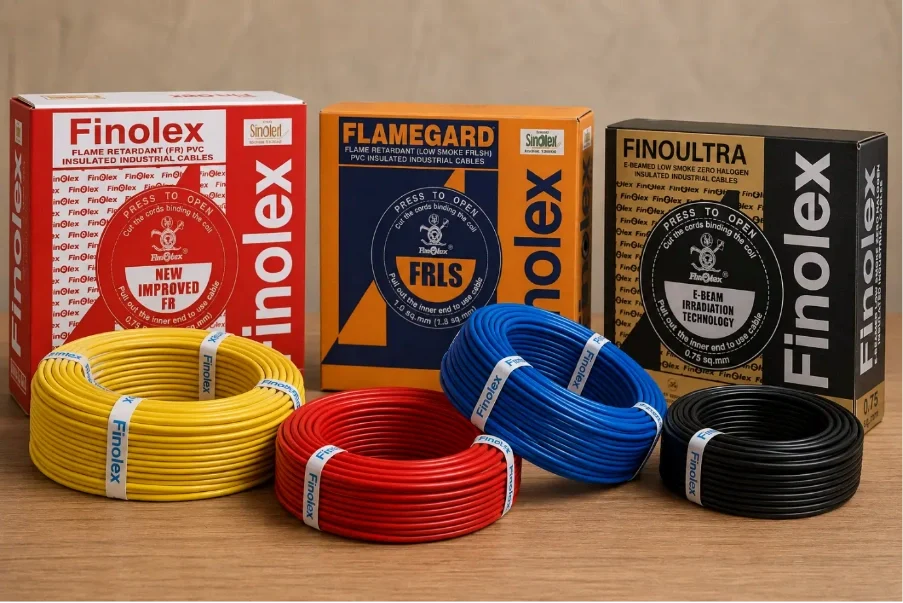
Finolex offers several insulation variants, including:
- FR (Flame Retardant)
- FRLS (Flame Retardant Low Smoke)
- FRLSH (Flame Retardant Low Smoke Halogen)
Each insulation type is intended for specific installation environments depending on the building’s fire safety considerations.
We’ll discuss these in detail later in this guide.
- Conductor Size
Every electrical circuit carries a different amount of current.
Using an undersized conductor can increase resistance, resulting in unnecessary heat generation and voltage drop, while an oversized conductor may increase project costs without providing additional benefits.
Finolex house wires are available in commonly used residential sizes including:
- 0.75 sq.mm
- 1.0 sq.mm
- 1.5 sq.mm
- 2.5 sq.mm
- 4 sq.mm
- 6 sq.mm
- 10 sq.mm
- 16 sq.mm
This allows electrical consultants and contractors to select the appropriate wire size based on circuit design and expected electrical load.
- Fire Performance
Modern electrical installations place greater emphasis on fire safety than ever before.
Depending on the application, homeowners may choose insulation that offers:
- Flame-retardant properties
- Reduced smoke generation
- Lower halogen gas emissions during combustion
Finolex’s FR, FRLS, and FRLSH product ranges are designed to address different fire-performance requirements while complying with applicable standards for PVC-insulated house wires.
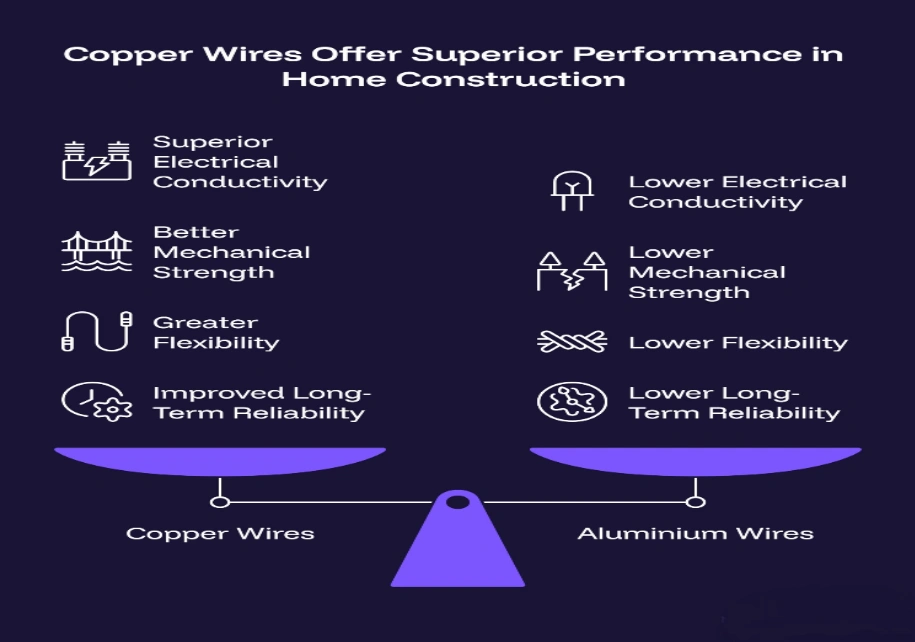
Why Copper Wires Are the Preferred Choice for New Home Construction
One of the first decisions homeowners make during electrical planning is whether to use copper or aluminium conductors.
Although both materials conduct electricity, copper remains the preferred choice for residential house wiring due to its combination of electrical, mechanical, and long-term performance characteristics.
Superior Electrical Conductivity
Copper offers significantly higher electrical conductivity than aluminium, allowing it to carry the same electrical load using a comparatively smaller cross-sectional area.
This contributes to:
- Improved energy efficiency
- Lower voltage drops over longer cable runs
- Consistent electrical performance
Finolex house wires use high-conductivity copper conductors manufactured to achieve a minimum of 100% IACS conductivity, helping ensure dependable current flow across residential circuits.
Better Mechanical Strength
Residential wiring passes through conduits, bends, junction boxes, switchboards, and distribution panels.
Copper’s higher tensile strength allows it to withstand installation stresses more effectively while maintaining reliable connections over time.
Greater Flexibility
Electricians generally find copper conductors easier to pull through conduits and terminate inside switchboards due to their flexibility.
This can contribute to cleaner installations and reduce the likelihood of conductor damage during wiring.
Improved Long-Term Reliability
Copper is less susceptible to issues such as excessive thermal expansion and loose electrical connections compared with aluminium conductors when installed correctly.
For this reason, copper house wires continue to be the preferred choice for residential buildings, villas, apartments, and premium housing projects.
Why Many Builders Prefer Finolex Copper House Wires
Over the years, Finolex has become one of India’s most recognised names in residential electrical wiring.
Some of the reasons homeowners, builders, and electrical contractors frequently choose Finolex include:
- High-conductivity copper conductors
- Compliance with IS 694:2010 for PVC-insulated house wires
- Availability of FR, FRLS, and FRLSH insulation options
- Multiple conductor sizes suitable for different residential circuits
- Standard Finolex 90 m and Finolex 180 m coil lengths
- Established distribution network and product availability across India
These factors make Finolex a practical choice for projects ranging from compact homes to premium residential developments, with the final selection based on the project’s electrical design and applicable standards.
Understanding FR, FRLS & FRLSH Wires: Which Finolex Wire Is Best for a New Home?
One of the most common questions homeowners ask while planning electrical wiring is:
“Should I choose FR, FRLS, or FRLSH wires for my new house?”
Although these insulation types may look similar, they are designed for different levels of fire performance and are intended for different installation environments.
Choosing the right insulation is just as important as selecting the correct conductor size. While all three variants are manufactured for electrical safety, each offers distinct characteristics that make it suitable for specific residential or commercial applications.
Finolex manufactures house wires in FR (Flame Retardant) and FRLSH (Flame Retardant Low Smoke Halogen) variants that comply with IS 694:2010 for PVC-insulated house wires. These products are engineered with high-conductivity copper conductors and tested for fire-performance characteristics such as Oxygen Index, Temperature Index, thermal stability, and insulation quality.
Instead of asking “Which wire is the best?”, the better question is:
“Which wire is best suited for my home’s safety requirements?”
Let’s understand each insulation type in detail.
What Are FR (Flame Retardant) Wires?
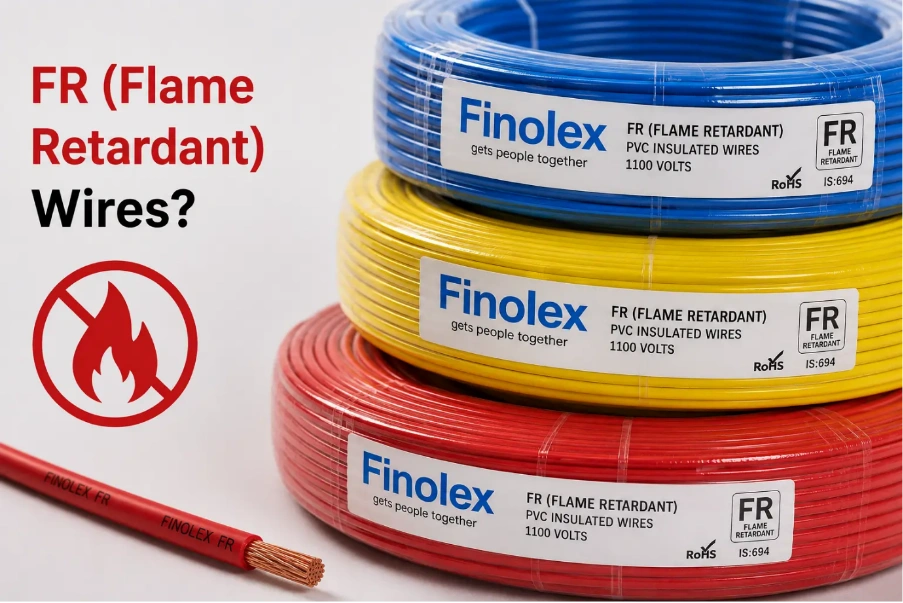
FR stands for Flame Retardant.
These wires are designed to resist the spread of flames when exposed to fire resulting from electrical faults such as short circuits or overloads. Their primary objective is to slow flame propagation, reducing the likelihood of a localized electrical fault spreading rapidly through the wiring system.
It is important to understand that Flame Retardant does not mean Fireproof.
No electrical wire can completely eliminate the possibility of fire. However, flame-retardant insulation is formulated to reduce flame spread under standardized test conditions, contributing to improved electrical safety.
Why Many Homeowners Choose Finolex FR Wires
Finolex FR house wires are manufactured using high-conductivity copper conductors and FR-grade PVC insulation.
According to Finolex’s published specifications, these wires offer:
- Minimum 100% IACS copper conductivity
- Oxygen Index greater than 29%
- Temperature Index above 250°C
- Thermal Stability of at least 150 minutes
- Compliance with IS 694:2010
In simple terms, these specifications mean the wire is designed to better withstand high temperatures and is less likely to continue burning once the source of ignition is removed under standard test conditions. This helps limit the spread of flames during electrical faults such as short circuits or overloads, providing an additional layer of safety for your home’s electrical system. While no wire can completely prevent a fire, using quality flame-retardant wires can contribute to a safer residential installation when selected and installed correctly.
Typical Residential Applications
Finolex FR wires are commonly selected for:
- Independent homes
- Villas
- Small residential projects
- General lighting circuits
- Ceiling fans
- Power sockets
- Kitchen circuits
- Bedrooms
- Living rooms
For homeowners looking for dependable everyday house wiring, Finolex FR wires provide an excellent balance between performance, quality, and value.
What Are FRLS (Flame Retardant Low Smoke) Wires?
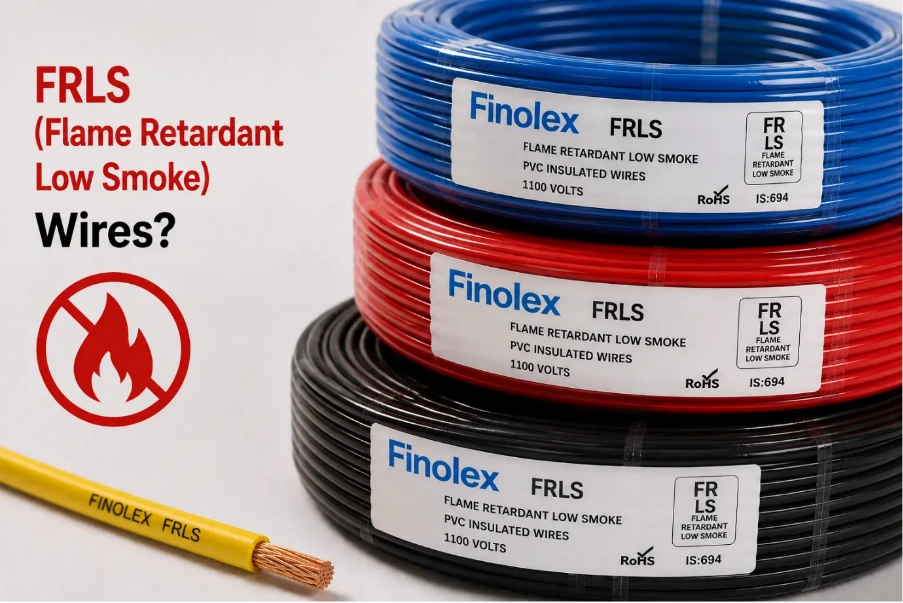
FRLS stands for Flame Retardant Low Smoke.
These wires combine the flame-retardant properties of FR insulation with the additional benefit of reduced smoke generation during combustion.
During a fire, smoke can significantly reduce visibility, making evacuation more difficult. FRLS insulation is formulated to generate comparatively lower smoke than conventional PVC-insulated wires under specified test conditions.
For this reason, FRLS wires are frequently specified in buildings where occupant safety is an important consideration.
Where Are FRLS Wires Commonly Used?
FRLS wires are widely chosen for:
- Apartment complexes
- High-rise residential buildings
- Office spaces
- Shopping centres
- Hotels
- Commercial establishments
- Educational buildings
Because modern apartment buildings often include enclosed corridors, staircases, lift lobbies, and shared escape routes, reducing smoke generation during emergencies becomes an important design objective.
What Are FRLSH (Flame Retardant Low Smoke Halogen) Wires?
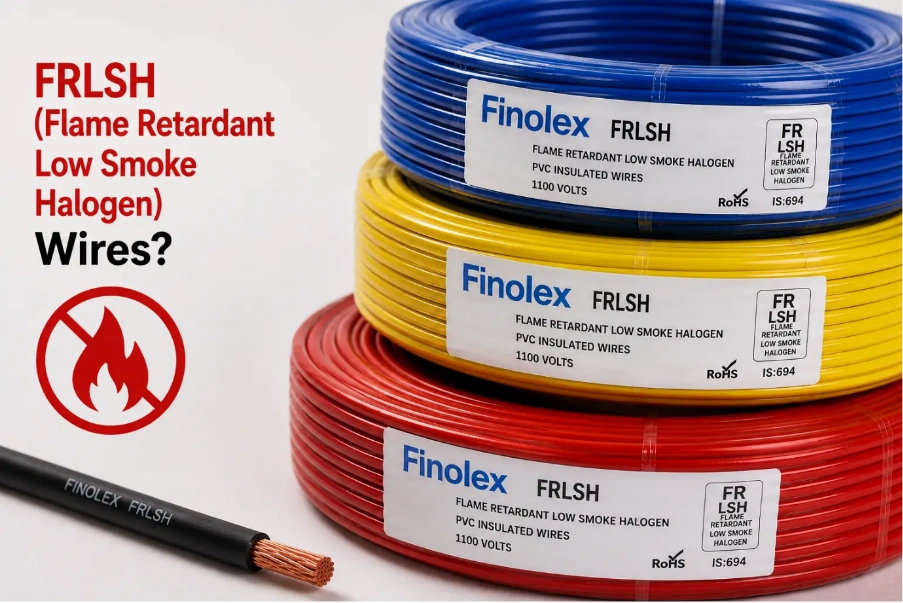
FRLSH stands for Flame Retardant Low Smoke Halogen.
Among the commonly used house-wire insulation types, FRLSH offers the most comprehensive fire-performance characteristics.
In addition to resisting flame propagation and reducing smoke generation, FRLSH insulation is designed to limit halogen acid gas emissions during combustion.
Traditional PVC insulation can release corrosive gases when exposed to fire. These gases may affect sensitive electrical equipment and building infrastructure. FRLSH insulation is engineered to minimize these emissions while also reducing smoke density.
For this reason, FRLSH wires are widely specified for buildings with high occupant density and critical infrastructure.
Finolex Flamegard FRLSH – Advanced Fire Performance
Finolex Flamegard FRLSH house wires are manufactured with advanced PVC insulation and high-conductivity copper conductors.
According to Finolex’s published technical specifications, Flamegard FRLSH wires offer:
- Minimum 100% IACS Copper Conductivity
- Oxygen Index greater than 29%
- Temperature Index above 250°C
- Maximum Smoke Density of 60%
- HCl Gas Emission below 20% by weight
- Thermal Stability exceeding 150 minutes
- Compliance with IS 694:2010
In simple terms, these features mean the wire is designed to slow the spread of flames, produce less smoke, and release lower levels of corrosive gases if an electrical fire occurs under standard test conditions. This can help improve visibility during evacuation and may reduce damage to nearby electrical equipment and building infrastructure. While no wire can completely prevent a fire, choosing a high-performance wire like Finolex Flamegard FRLSH adds an extra layer of safety for modern homes where people and valuable electronics need greater protection.
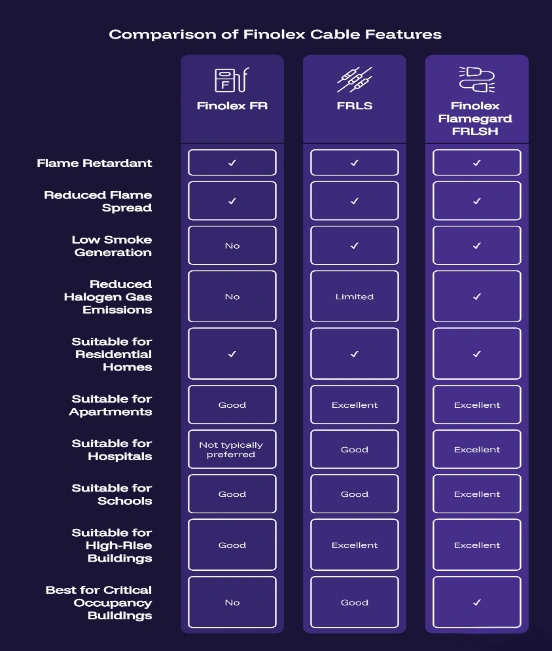
Which Finolex Wire Should You Choose for Your New Home?
There isn’t a single wire that’s ideal for every project. The most suitable choice depends on your home’s design, occupancy, and fire-safety objectives. Choose Finolex FR If:- You’re constructing an independent house.
- Your electrical consultant specifies flame-retardant wiring.
- You want reliable, high-quality copper house wires for standard residential applications.
- Budget is an important consideration while still prioritizing safety.
- You’re wiring an apartment or multi-storey residence.
- The building has enclosed corridors and shared escape routes.
- Reducing smoke generation during emergencies is part of the project’s fire-safety strategy.
- The consultant recommends low-smoke insulation.
- You’re building a premium home.
- The property includes a home theatre, automation systems, or expensive electronics.
- Occupant safety is a primary consideration.
- You want enhanced fire-performance characteristics beyond standard flame-retardant insulation.
- The project involves villas, luxury residences, high-rise apartments, hospitals, schools, or commercial complexes.
Finding the Right Finolex Wire for Your Project
Once you’ve determined the appropriate conductor size and insulation type for your new home, the next step is purchasing genuine Finolex house wires from a trusted supplier. Using authentic electrical products helps ensure that the wires meet the manufacturer’s specifications and applicable quality standards. Whether you’re looking for Finolex FR, FRLS, or FRLSH wires in different conductor sizes, choosing a reliable electrical supplier can simplify product selection and ensure access to genuine products for your residential wiring project. Platforms such as Eleczo offer a wide range of Finolex electrical wires and other electrical products, making it easier for homeowners, contractors, and builders to source the right materials for their projects.Frequently Asked Questions (FAQs)
For most modern homes, copper house wires are generally preferred because of their excellent electrical conductivity, flexibility, and long service life. Finolex offers FR, FRLS, and FRLSH house wires, allowing homeowners to select an insulation type that best matches the project’s fire-safety requirements and electrical design.
Finolex is one of India’s established manufacturers of electrical wires and cables. Its house wires are manufactured using high-conductivity copper conductors and are available in multiple insulation options, conductor sizes, and coil lengths to suit different residential applications. According to the manufacturer, its house wires comply with IS 694:2010.
The choice depends on your project’s requirements:
- FR wires: Commonly used for general residential wiring where flame-retardant performance is required.
- FRLS wires: Designed to combine flame-retardant properties with reduced smoke generation.
- FRLSH wires: Additionally designed to reduce halogen gas emissions during combustion, making them a preferred option for premium homes and buildings with higher fire-safety considerations.
The final selection should be based on the project’s electrical specifications and applicable regulations.
Copper is widely preferred for residential electrical installations because it offers higher electrical conductivity, better flexibility, greater mechanical strength, and reliable long-term performance. For these reasons, most new homes use copper conductors for internal electrical wiring.
The appropriate conductor size depends on the electrical load, circuit design, installation method, and applicable standards.
Common residential sizes include:
- 1.0 sq.mm: Lighting circuits
- 1.5 sq.mm: Light-duty power circuits
- 2.5 sq.mm: Socket outlets
- 4 sq.mm: Air conditioners and higher-load circuits
- 6 sq.mm and above: Heavy-load applications
Always consult a qualified electrician or electrical consultant before finalizing conductor sizes.
Yes. According to the manufacturer’s published specifications, Finolex PVC-insulated house wires are manufactured in compliance with IS 694:2010, the applicable Indian Standard for PVC-insulated house wiring.
To ensure authenticity, always purchase Finolex wires from trusted suppliers, authorized dealers, or established online electrical stores. Check the product packaging, technical markings, and manufacturer details before installation.
Yes. Finolex house wires are available through trusted online electrical retailers such as Eleczo, where customers can choose from multiple insulation types, conductor sizes, and coil lengths for residential, commercial, and industrial applications.
Yes. Eleczo offers a wide range of genuine Finolex electrical wires and cables with Pan-India delivery, making it convenient for homeowners, contractors, builders, and businesses to source electrical products online.
While this guide provides general information, the final selection of wire type, conductor size, and insulation should always be based on your home’s electrical design, anticipated load, installation conditions, and the recommendations of a qualified electrical engineer or licensed electrician. This helps ensure compliance with applicable standards and safe, reliable system performance.