When selecting electrical wires for a new home, many homeowners focus on the brand, price, or insulation type but often overlook one of the most important factors — wire size.
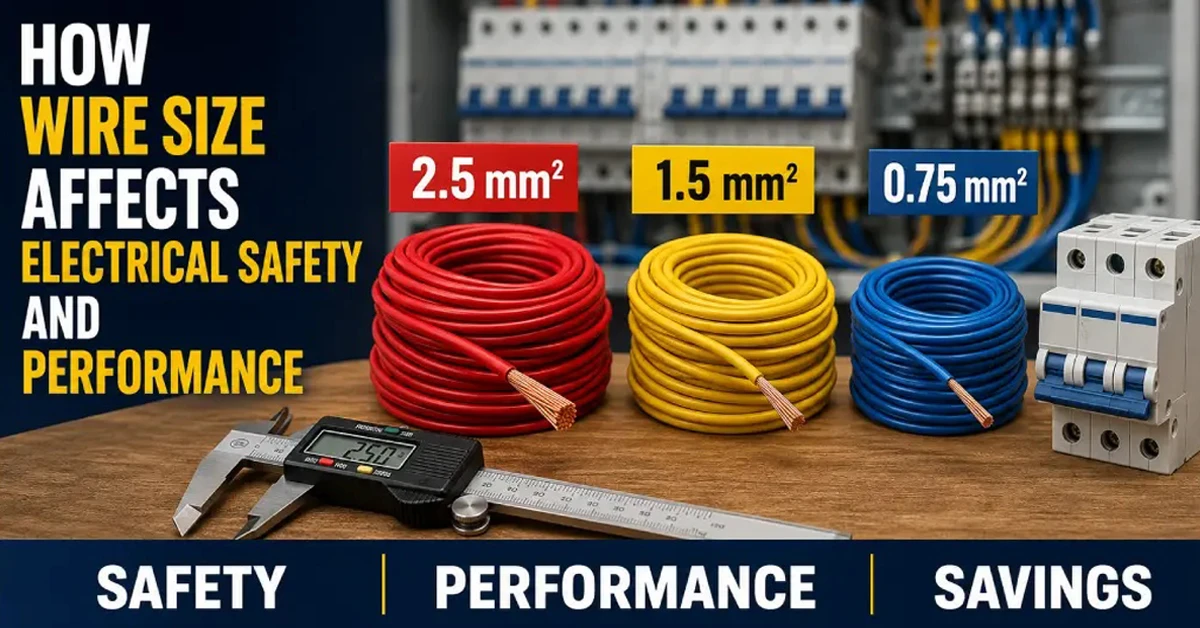
Wire size directly affects how much electrical current a wire can safely carry. Choosing the correct conductor size helps ensure that electrical appliances receive stable power while reducing the risk of overheating, voltage drops, and insulation damage.
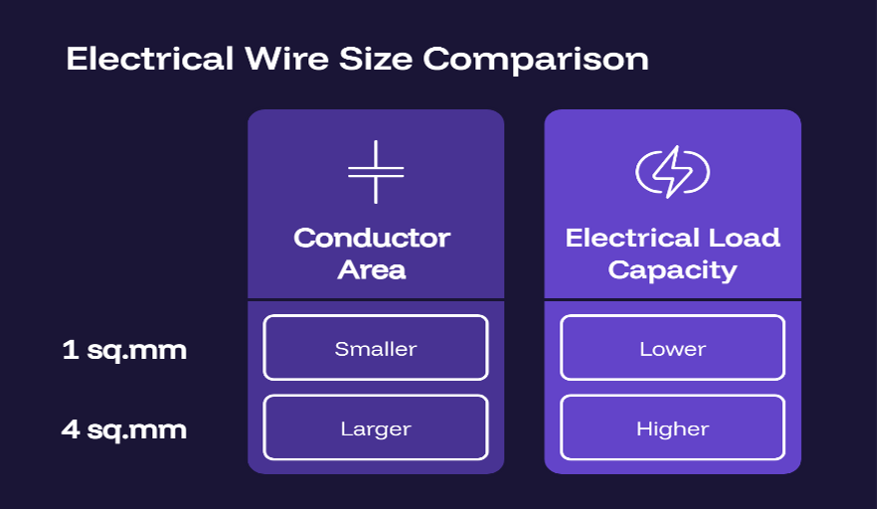
The size of an electrical wire is generally measured in square millimetres (sq.mm), which refers to the cross-sectional area of the copper conductor inside the insulation.
For example:
-
- A 1 sq.mm wire has a smaller conductor area compared with a 4 sq.mm wire.
-
- A larger conductor can carry higher electrical loads because it offers lower resistance to the flow of current.
Simply put, the higher the electrical load, the larger the wire size generally required.
However, selecting a wire size is not about choosing the biggest wire available. The correct size depends on factors such as:
-
- Type of appliance connected
-
- Expected electrical load
-
- Circuit length
-
- Installation method
-
- Applicable electrical standards
-
- Recommendations of the electrical consultant
Using the correct wire size ensures that the wiring system performs efficiently and safely throughout its service life.
What Happens When the Wrong Wire Size Is Used?
Selecting an unsuitable wire size can affect both electrical performance and safety.
1. Excessive Heating
Every electrical wire has a limit to how much current it can carry safely.
If a smaller wire is used for a high-power appliance, the conductor may heat up because it is carrying more current than it is designed for.
Over time, excessive heat can:
-
- Reduce insulation life
-
- Affect electrical reliability
-
- Increase the possibility of insulation damage
2. Voltage Drop and Poor Appliance Performance
When electricity travels through a wire, some energy is lost due to resistance.
A wire that is too small for the load may experience higher voltage drop, which can affect the performance of appliances such as:
-
- Air conditioners
-
- Refrigerators
-
- Water heaters
-
- Pumps
-
- Heavy kitchen appliances
Using an appropriately sized copper wire helps maintain stable power delivery across the circuit.
3. Reduced Long-Term Reliability
Electrical wiring is expected to function safely for many years after installation, especially because most residential wiring remains concealed inside walls.
Choosing the right conductor size during construction helps reduce future maintenance problems and supports a more reliable electrical system.
This refers to how the MCCB responds to faults. Common types include thermal-magnetic and electronic tripping, which help protect against overloads and short circuits.
Understanding Common Wire Sizes Used in Homes
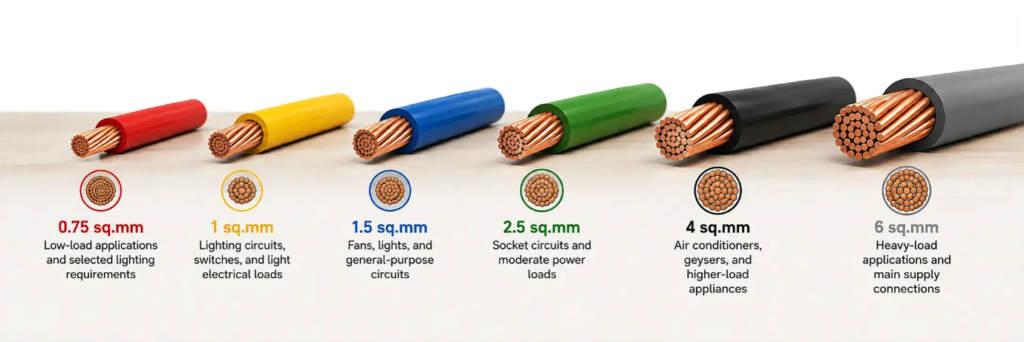
Different circuits inside a home require different wire sizes depending on their electrical load.
The commonly used residential wire sizes include:
| Wire Size | Common Applications |
| 0.75 sq.mm | Low-load applications and selected lighting requirements |
| 1 sq.mm | Lighting circuits, switches, and light electrical loads |
| 1.5 sq.mm | Fans, lights, and general-purpose circuits |
| 2.5 sq.mm | Socket circuits and moderate power loads |
| 4 sq.mm | Air conditioners, geysers, and higher-load appliances |
| 6 sq.mm and above | Heavy-load applications and main supply connections |
The final wire selection should always be based on the electrical design prepared for the building rather than only following general assumptions.
Why Copper Wire Size Matters in Residential Electrical Systems
The conductor material also plays an important role along with wire size.
Copper is widely preferred for residential wiring because of its excellent electrical conductivity, flexibility, and durability. High-quality copper conductors allow efficient current flow while supporting reliable connections during installation.
Finolex house wires are manufactured using high-conductivity copper conductors. According to Finolex’s published specifications, its wires use more than 99.97% pure electrolytic-grade copper with conductivity exceeding 100% IACS, helping deliver efficient electrical performance for residential and commercial applications.
Choosing the Right Finolex Wire Size for Different Home Applications
Finolex offers copper house wires in a wide range of conductor sizes, making it easier for homeowners, electricians, and builders to choose a wire that matches the electrical load of each circuit. Selecting the correct wire size is just as important as choosing the right insulation because every circuit in your home carries a different amount of current.
The table below shows the commonly used conductor sizes for residential applications in India. These are general industry practices and should always be verified by a qualified electrician based on the project’s electrical design and applicable standards.
| Application | Common Finolex Wire Size | Why This Size Is Commonly Used |
| Lighting Circuits (LED lights, tube lights, decorative lighting) | 1.5 sq.mm | Lighting circuits generally draw lower current. A 1.5 sq.mm copper wire is commonly used because it safely carries the load while providing reliable performance for everyday lighting. |
| Ceiling Fans & Exhaust Fans | 1.5 sq.mm | Fans consume relatively low power, making 1.5 sq.mm a commonly selected size for smooth and efficient operation without unnecessary oversizing. |
| General Power Sockets (6A/16A outlets) | 2.5 sq.mm | Socket outlets often power appliances such as televisions, computers, mixers, irons, and vacuum cleaners. A 2.5 sq.mm conductor provides additional current-carrying capacity compared with lighting circuits. |
| Kitchen Power Points | 2.5–4 sq.mm | Kitchen appliances such as microwave ovens, induction cooktops, electric kettles, and mixers may draw higher loads. Depending on the appliance and circuit design, electricians commonly specify 2.5 sq.mm or 4 sq.mm conductors. |
| Water Geysers | 2.5–4 sq.mm | Since geysers operate continuously at relatively high power, they are usually connected to a dedicated circuit with a suitably sized conductor to reduce heating and voltage drop. |
| Air Conditioners | 4–6 sq.mm | Air conditioners require dedicated circuits because they can draw higher current, particularly during startup. A larger conductor helps maintain stable power delivery and reduces voltage drop over longer cable runs. The exact size depends on the AC capacity and wiring distance. |
| Main Distribution Board (Sub-main Wiring) | 6 sq.mm and above | The main supply carries electricity to multiple circuits throughout the house. Larger conductor sizes are commonly used to safely handle the combined electrical load of the home. |
Why Does the Wire Size Increase for Heavy Appliances?
A simple way to understand this is to think of the wire as a water pipe.
A small pipe can comfortably carry a limited amount of water, but if too much water is forced through it, pressure builds up. Similarly, a smaller electrical wire is suitable for low-power appliances such as lights and fans, while heavy appliances like air conditioners, geysers, ovens, and induction cooktops require thicker copper conductors because they carry more electrical current.
Using the correct Finolex wire size helps the electrical system:
-
- Carry the required current more efficiently.
- Reduce unnecessary heat build-up within the conductor.
-
- Minimise voltage drop, especially over longer wiring runs.
-
- Support the reliable operation of connected appliances.
-
- Provide long-term performance when installed according to applicable standards and the project’s electrical design.
Because Finolex house wires are available in multiple conductor sizes and insulation options, electricians can choose the most appropriate combination for lighting, power, and dedicated heavy-load circuits while following the home’s electrical layout and safety requirements.
Important Note: Wire size should never be selected based solely on an appliance’s wattage. Factors such as cable length, installation method, grouping of cables, ambient temperature, and the protective device (MCB) also influence the correct conductor size. Always follow the recommendations of a qualified electrical engineer or licensed electrician and the applicable provisions of IS 732 for residential wiring installations.
Why Electricians Prefer Finolex Wires for Different Load Requirements
A reliable electrical installation requires more than just choosing the right wire size. The quality of the conductor, insulation, manufacturing consistency, and compliance with applicable standards also influence long-term performance.
Finolex has developed a wide range of house wires designed for different residential applications, including:
-
- High-conductivity copper conductors
-
- Multiple conductor sizes
-
- Flame-retardant insulation options
-
- FRLSH variants for enhanced fire-performance requirements
-
- Compliance with applicable Indian standards
Finolex’s house wire range includes FR and FRLSH options designed for residential applications where safety, durability, and fire performance are important considerations.
For homeowners constructing a new house, selecting the right combination of wire size + insulation type + conductor quality is more important than simply choosing the lowest-priced option.
Common Mistakes to Avoid When Choosing Electrical Wires
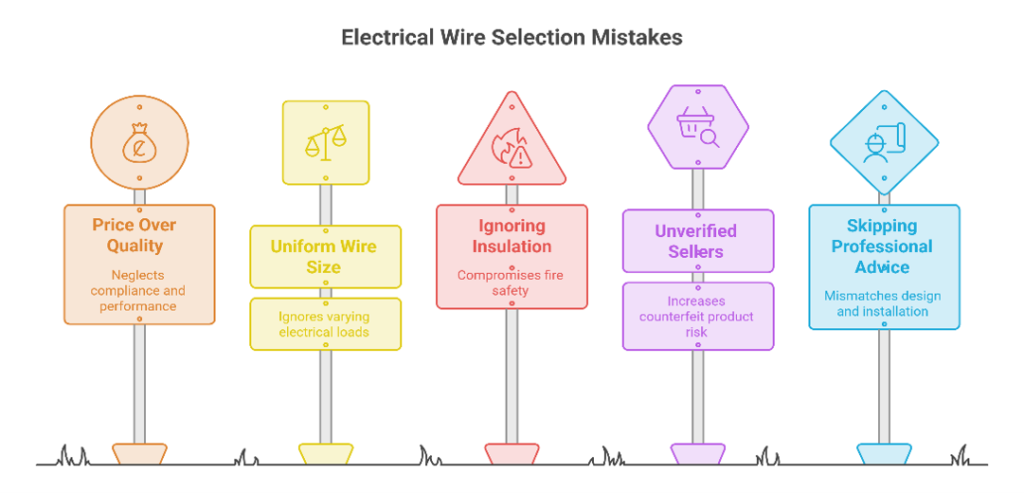
Even the best electrical wire may not deliver the expected performance if the wrong product is selected for the application. Before purchasing wires for a new home, avoid these common mistakes:
-
- Choosing wires based only on price rather than quality and compliance.
-
- Using the same wire size for every circuit, regardless of the electrical load.
-
- Ignoring the insulation type, especially in buildings where fire safety is an important consideration.
-
- Purchasing from unverified sellers, which may increase the risk of counterfeit products.
-
- Skipping professional advice, as wire size and insulation should always match the electrical design prepared by a qualified electrician.
Choosing genuine Finolex house wires in the appropriate conductor size and insulation type can help support a safer and more reliable electrical installation when installed according to the manufacturer’s recommendations and applicable standards.
Choosing a Trusted Source for Finolex House Wires
Selecting the right electrical wire is only one part of a successful home wiring project. Equally important is purchasing from a supplier that provides access to the required conductor sizes, insulation variants, and product information so you can make an informed decision.
If you’ve decided on Finolex for your new home, sourcing your wires through an established electrical procurement platform can simplify the buying process. Eleczo offers Finolex house wires across different conductor sizes and insulation options, making it easier for homeowners, contractors, and electricians to find products that match their project requirements. With decades of experience in the electrical industry and a technology-enabled procurement platform, Eleczo supports both residential and commercial buyers throughout their purchasing journey.
Frequently Asked Questions (FAQs)
1. How Wire Size Affects Electrical Safety and Performance
Wire size directly affects electrical safety and performance because it determines how much current a wire can safely carry. A correctly sized copper wire helps reduce overheating, voltage drop, and energy loss while supporting reliable operation of electrical appliances.
2. Which Finolex wire is best for new home construction?
The right Finolex wire depends on your home’s electrical design and fire safety requirements. Finolex FR wires are commonly used for general residential wiring, while Finolex FRLSH wires are often preferred where reducing smoke and halogen gas emissions during a fire is an important consideration. The final choice should be based on the project’s specifications and the recommendations of a qualified electrician.
3. What is the difference between FR and FRLSH wires?
FR (Flame Retardant) wires are designed to slow the spread of flames during an electrical fault. FRLSH (Flame Retardant Low Smoke Halogen) wires offer the same flame-retardant properties while also being designed to produce lower smoke and reduced halogen gas emissions during combustion under standard test conditions. This can help improve visibility during evacuation and reduce corrosive fumes in enclosed spaces.
4. Is copper wire better than aluminium wire for house wiring?
Copper is widely preferred for residential wiring because it offers higher electrical conductivity, better flexibility, greater mechanical strength, and reliable long-term performance. Finolex house wires are manufactured using high-purity electrolytic-grade copper with a minimum conductivity of 100% IACS, according to the manufacturer’s specifications.
5. How do I choose the correct wire size for my home?
The appropriate wire size depends on factors such as the electrical load, circuit length, installation method, and the type of appliances being connected. Lighting circuits generally require smaller conductor sizes than power sockets or air conditioners. The final wire size should always be selected by a qualified electrician in accordance with the electrical design and applicable standards.
6. Why is wire size important for electrical safety?
A correctly sized wire is designed to carry the required electrical current safely. Using a wire that is too small for the connected load may result in excessive heating, voltage drop, and reduced insulation life. Selecting the appropriate conductor size helps support efficient power distribution and long-term reliability.
7. Are Finolex house wires compliant with Indian Standards?
Yes. According to the manufacturer, Finolex PVC-insulated house wires are manufactured in compliance with IS 694:2010, the applicable Indian Standard for PVC-insulated house wiring. The company also specifies fire-performance characteristics such as Oxygen Index and Temperature Index for its FR and FRLSH product ranges.
8. Can I use the same wire size for my entire house?
No. Different electrical circuits carry different loads, so using the same conductor size throughout the house is generally not recommended. For example, lighting circuits, socket outlets, air conditioners, and geysers typically have different wiring requirements. A properly designed electrical installation uses conductor sizes suited to each circuit.
9. Why do many electricians choose Finolex house wires?
Many electrical professionals choose Finolex because the company offers a broad range of house wires with high-conductivity copper conductors, multiple conductor sizes, and insulation options such as FR and FRLSH. According to the manufacturer, the wires undergo high-voltage spark testing and are manufactured to comply with IS 694:2010.
10. How can I identify genuine Finolex wires?
To help ensure authenticity, purchase Finolex wires from trusted electrical suppliers or authorized dealers. Check that the wire carries the ISI mark, the manufacturer’s branding, product specifications, and other identification markings printed on the insulation. Finolex also advises buyers to retain the purchase invoice for verification if needed.
11. Where can I buy Finolex house wires online?
Finolex house wires are available through authorised distributors and established electrical procurement platforms. When buying online, choose a trusted supplier that provides product specifications, conductor size options, and insulation variants so you can select the most suitable wire for your project’s requirements.