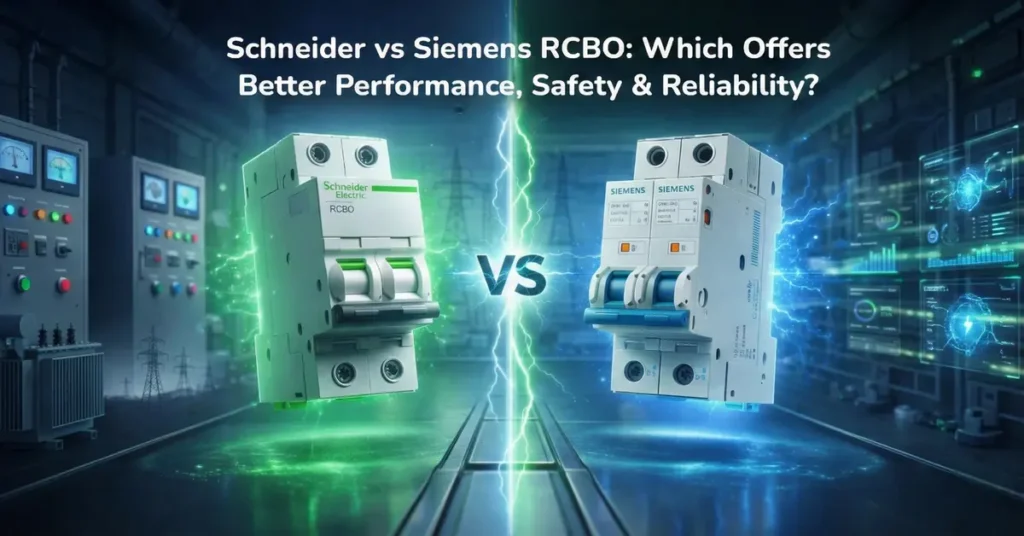
Selecting the right RCBO (Residual Current Breaker with Overcurrent Protection) is a critical decision in modern electrical systems. In industrial and commercial environments, protection devices are not just safety components—they directly impact system reliability, downtime, maintenance costs, and compliance with electrical standards. Among global brands, Siemens and Schneider Electric are two of the most trusted manufacturers offering high-performance RCBO solutions.
This comparison focuses on real-world selection factors such as models, technical specifications, performance under load, operational reliability, and long-term cost efficiency.
Role of Siemens and Schneider RCBO in Modern Electrical Systems
Siemens RCBO in Electrical Systems
Siemens RCBOs are widely used in industrial and commercial power distribution systems where system stability and continuous operation are critical. Siemens designs its RCBOs to provide reliable protection against earth leakage, overload, and short-circuit conditions while maintaining consistent performance under varying load profiles. These devices are commonly deployed in manufacturing plants, data centers, infrastructure projects, and utility panels where fault tolerance and durability are essential.
Key roles of Siemens RCBO:
- Protects circuits from residual current and overcurrent faults
- Ensures stable operation in high-load environments
- Supports industrial-grade panel designs
- Reduces risk of unplanned shutdowns
- Enhances personnel and equipment safety
Schneider RCBO in Electrical Systems
Schneider Electric RCBOs play a key role in modern installations that require flexibility, modular design, and smart system integration. Schneider focuses on delivering RCBO solutions that integrate easily with its Acti9 and EcoStruxure platforms, making them suitable for commercial buildings, smart factories, and digitally monitored systems.
Key roles of Schneider RCBO:
- Provides precise fault detection and fast disconnection
- Supports modular and scalable electrical architectures
- Integrates with smart monitoring and energy systems
- Improves safety compliance and system visibility
- Enables efficient maintenance and future upgrades
Together, Siemens and Schneider RCBOs form the backbone of reliable and compliant protection systems in modern electrical infrastructure.
Schneider vs Siemens RCBO: Models Overview
Both Schneider Electric and Siemens offer a focused portfolio of RCBO models designed to meet the requirements of modern industrial and commercial power distribution systems. These models are engineered to provide combined protection against earth leakage and overcurrent faults while supporting standardized panel configurations. Their product ranges cover different current ratings, tripping characteristics, and installation formats to suit a wide range of application needs.
Schneider Electric RCBO Models
Schneider RCBOs are primarily available under the Acti9 product family, offering strong modular compatibility, compact design, and system flexibility. These models are commonly used in commercial buildings and industrial panels where space efficiency and standardized components are important.
Schneider RCBO series include:
- Acti9 iDPN N Vigi
- Acti 9 Vigi xC60
1. Schneider Acti9 DPN N Vigi RCBO Series:
Schneider Acti9 DPN N Vigi RCBO Series is a compact RCBO designed for single-phase circuits, providing combined residual current and overcurrent protection with fast fault disconnection for residential and light commercial systems.
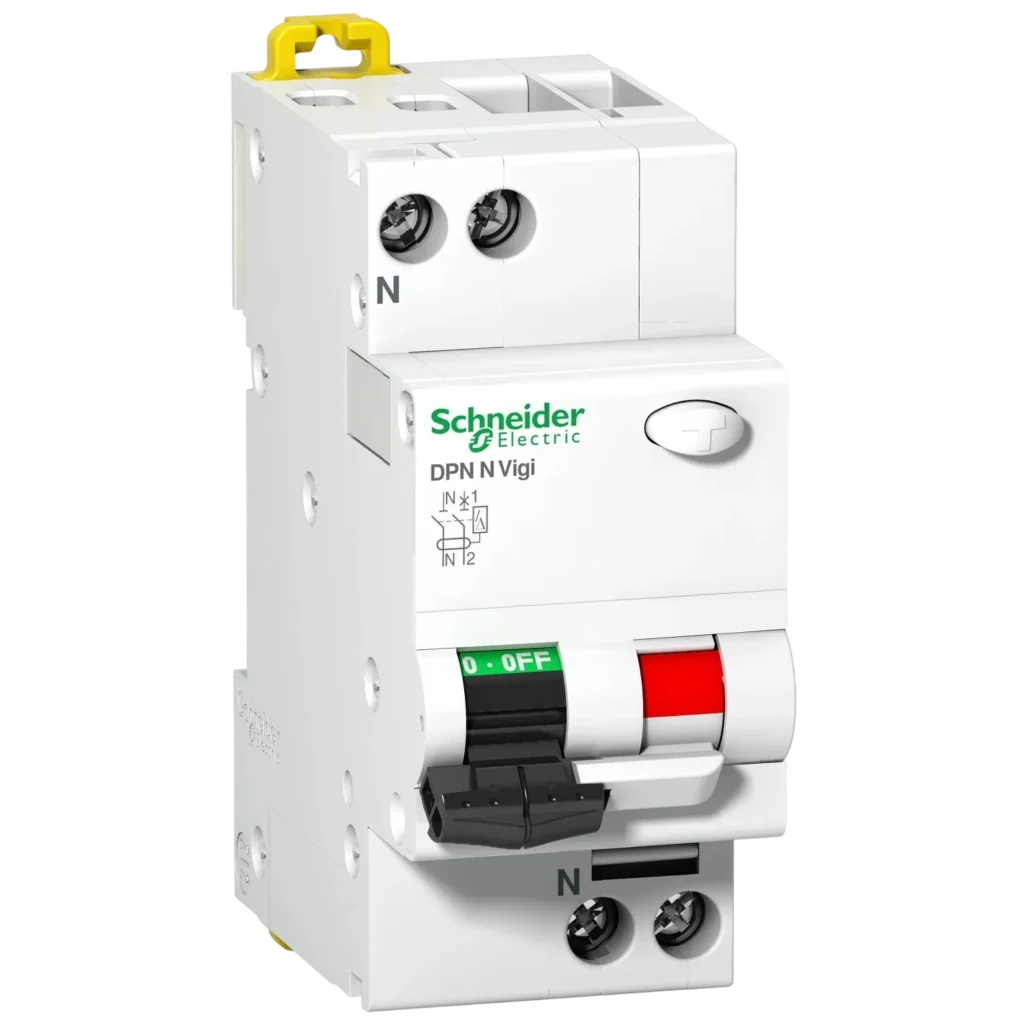
Technical Specifications:
- Rated current (In): 6 A to 40 A
- Number of poles: 1P + N, 3P + N
- Residual current type: Type AC, Type A-SI
- Residual current sensitivity (IΔn): 30 mA / 100 mA / 300 mA
- Rated voltage (Ue): 230/240 V AC
Best Selling Schneider Acti9 DPN N Vigi RCBO Series in India
2. Schneider Acti 9 Vigi xC60 RCBO Series:
Schneider Acti 9 Vigi xC60 RCBO Series is an industrial-grade RCBO series offering higher current ratings, multiple pole options, and enhanced breaking capacity for commercial buildings and industrial power distribution environments.
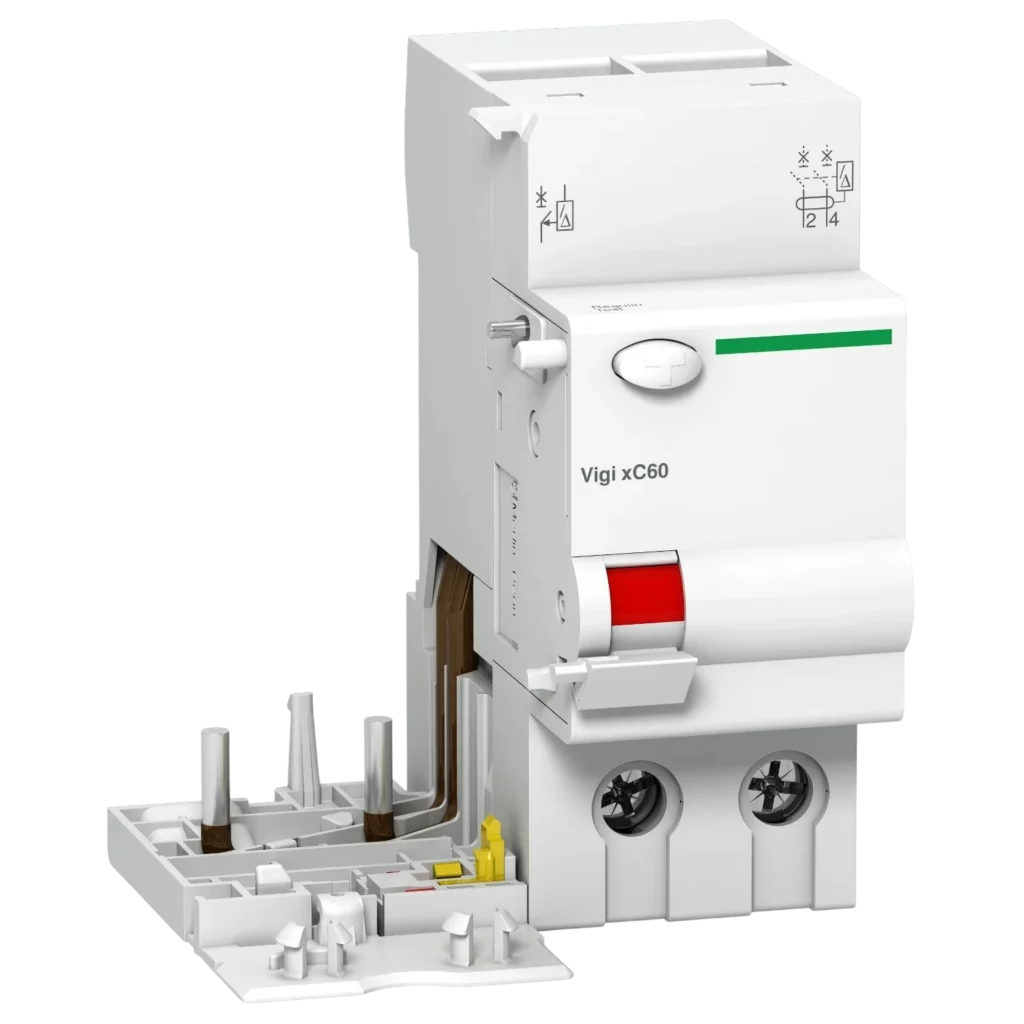
Technical Specifications
- Rated operational current (In): 6 A to 63 A
- Number of poles: 2P, 4P
- Rated operational voltage (Ue): 230/240 V AC, 415 V AC
- Residual current sensitivity (IΔn): 30 mA / 100 mA / 300 mA
- Residual current type: Type AC / Type A-SI
Top Selling Schneider Acti 9 Vigi xC60 RCBO Series in India
Siemens RCBO Models
Siemens RCBOs available in this category are offered under the 5SU product line, known for their compact form factor and stable operational performance in industrial and commercial environments.
Siemens RCBO series include:
- 5SU RCBO series
Siemens 5SU RCBO Series:
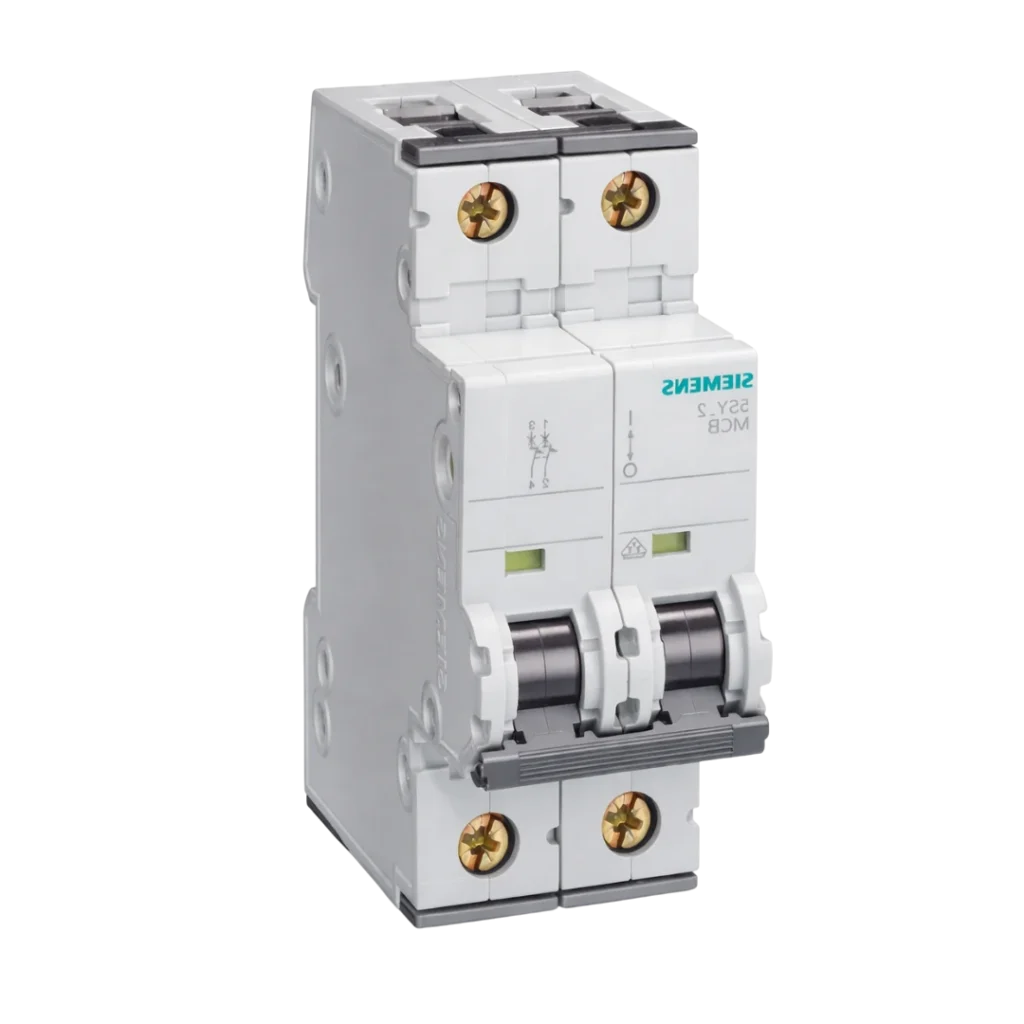
Technical Specifications:
- Rated operational current (In): 6 A to 63 A (model-dependent)
- Number of poles: 2p, 4p, 1P+N
- Rated operational voltage (Ue): 240V AC, 415 V AC
- Residual current sensitivity (IΔn): 30 mA, 100 mA, 300 mA
- Residual current type: Type A, Type AC
Both Schneider and Siemens RCBO portfolios address diverse application needs across commercial and industrial systems. Selection should focus on electrical ratings, protection type, panel architecture, and compliance requirements to ensure optimal safety and operational performance.
Best Selling Siemens 5SU RCBO Series in India
Performance Comparison Table: Industrial and Commercial Applications
| Performance Parameter | Schneider RCBO | Siemens RCBO |
| Fault response time | Fast residual current detection with consistent tripping accuracy | Fast and stable tripping under varying load conditions |
| Performance under load | Optimized for mixed commercial loads and modular systems | Highly stable in continuous high-load industrial environments |
| Nuisance tripping | Low, with good selectivity in coordinated protection schemes | Very low, designed for stable operation in heavy-duty systems |
| Thermal stability | Good thermal endurance for standard industrial temperatures | Excellent thermal performance under prolonged high current |
| Mechanical endurance (operations) | High switching endurance in modular panel systems | Very high mechanical life in harsh environments |
| Breaking capacity support | 6 kA / 10 kA models for commercial and light industrial systems | 6 kA / 10 kA models for commercial and industrial fault levels |
| System integration | Strong compatibility with Schneider Acti9 ecosystem | Seamless integration with Siemens SENTRON systems |
| Application focus | Commercial buildings, smart infrastructure, institutional projects | Manufacturing plants, utilities, heavy industrial installations |
Product Reliability and Operational Lifespan Comparison:
Schneider RCBO – Reliability and Operational Lifespan
Schneider Acti9 RCBOs are engineered for sustained reliability through high mechanical endurance, controlled arc energy dissipation, and stable electrical performance. The design ensures consistent fault interruption, thermal stability under continuous load, and minimal degradation across long operational lifecycles.
Technical indicators:
- Mechanical endurance: up to 20,000 operations
- Electrical endurance: designed for repeated fault interruption
- Stable long-term contact resistance
- Controlled arc chamber for reduced contact erosion
- Thermal stability under continuous load
- Compliance with IEC/EN 61009
Siemens RCBO – Reliability and Operational Lifespan
Siemens 5SU RCBOs emphasize mechanical robustness and electrical fault endurance in industrial environments. Reinforced internal construction supports high fault energy, stable contact pressure, and reliable disconnection across extended switching and fault-clearing cycles.
Technical indicators:
- Mechanical endurance: up to 20,000 switching cycles
- High short-circuit withstand capability
- Reinforced contact system for electrical stability
- Stable contact resistance over lifecycle
- Thermal resilience in industrial panels
- Compliance with IEC/EN 61009
From an engineering perspective, both Schneider and Siemens RCBOs meet industrial reliability expectations. The optimal choice depends on system fault levels, load profiles, thermal environment, lifecycle requirements, and coordination with upstream protection devices, rather than brand reputation or initial cost alone.
Cost vs Value: Total Cost of Ownership (TCO) Analysis
When evaluating Siemens and Schneider RCBOs, the initial purchase price represents only a small portion of the overall investment. A proper assessment must consider Total Cost of Ownership (TCO), which includes installation, operational reliability, maintenance frequency, downtime risk, and service life.
Schneider RCBO – TCO Perspective
Schneider RCBOs typically offer strong value in systems where modular design, easy replacement, and system scalability are priorities. Their standardized Acti9 architecture reduces installation complexity and minimizes maintenance time. Stable tripping behavior and modular compatibility also lower long-term service costs, especially in commercial and institutional environments where frequent panel modifications occur.
Siemens RCBO – TCO Perspective
Siemens RCBOs focus on mechanical robustness and long-term electrical stability, which reduces the probability of failure in high-duty industrial applications. Their ability to withstand high fault energy and continuous load conditions helps minimize unplanned shutdowns, production losses, and component replacement costs over time.
TCO Conclusion
While Schneider may offer operational efficiency and system flexibility, Siemens delivers long-term value through durability and fault tolerance. From a TCO standpoint, the optimal choice depends on application severity, maintenance strategy, and acceptable downtime risk, not just product pricing.
Where to Purchase Verified Schneider and Siemens RCBO
For industrial and commercial projects, sourcing RCBOs from a verified and authorized supplier is essential to ensure product authenticity, safety compliance, and long-term reliability. Purchasing from unauthorized sources increases the risk of counterfeit devices, missing certification, and lack of warranty support, which can directly impact system performance and audit acceptance.
Eleczo is a trusted B2B electrical supplier offering genuine Schneider and Siemens RCBOs with proper documentation and technical traceability. Eleczo supports project-based procurement by providing verified products, competitive pricing, and professional assistance for system selection and replacement.
Why source RCBOs from Eleczo:
- Genuine Schneider and Siemens products
- Manufacturer-backed warranty
- Compliance certificates and datasheets
- Reliable stock availability and delivery
- Technical support for industrial applications
Choosing a verified supplier like Eleczo ensures compliance, system safety, and reduced operational risk across the entire electrical installation lifecycle.
Final Verdict: Which RCBO Is Better for Your System?
Choosing between Schneider and Siemens RCBOs should be driven by system requirements, operating conditions, and long-term performance expectations, rather than brand preference alone. Both manufacturers offer world-class residual current breakers with overcurrent protection that comply with IEC/EN 61009 standards, deliver high mechanical endurance, and support a wide range of current ratings and tripping characteristics.
Schneider RCBOs are particularly well-suited for installations where modular architecture, panel flexibility, and integration with intelligent monitoring systems are priorities. Their precision tripping and modular compatibility help simplify maintenance and future expansion.
Siemens RCBOs excel in heavy industrial environments that demand strong mechanical robustness, high fault-current tolerance, and sustained performance under elevated ambient temperatures. Their stable electrical endurance and reinforced construction make them reliable in high-duty applications.
Ultimately, the “better” RCBO depends on your system’s load profile, fault level, environmental conditions, and maintenance strategy. Selecting the device that aligns with these technical parameters will yield the best long-term performance and value.